How much of the working day gets lost in the loop?
Sessions on phones, focus and AI for teams, leaders and co-working spaces.
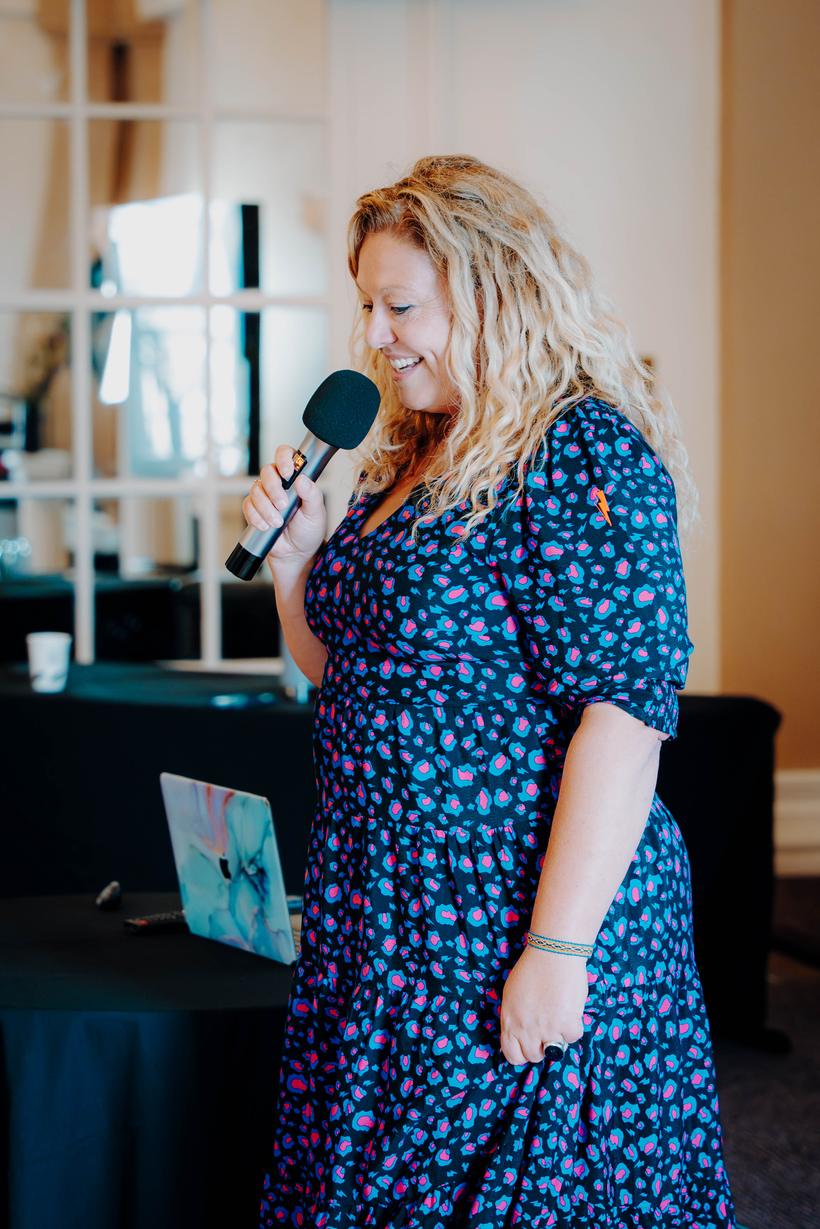
I'm Katie Brockhurst. I spent twenty-five years working inside social media, and now I teach people how digital platforms and AI are designed to hold our attention, with an experiment to try.
Seven days of noticing the pull and choosing what happens next, so people spend less time on autopilot and get back more of their focus, their thinking and the work they sat down to do.
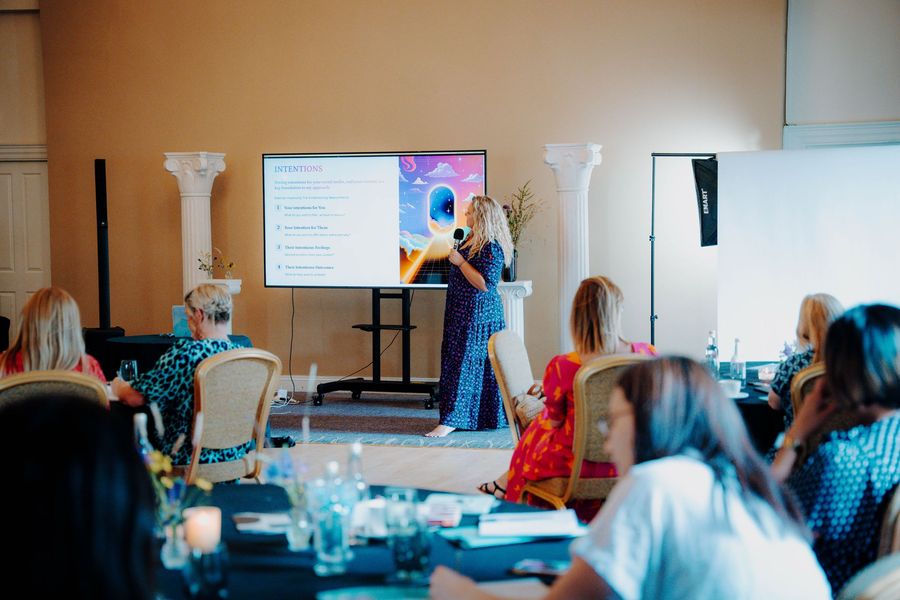
Most of us can't do our jobs without technology. But the phone on the desk, the messages that never stop and now AI are all designed to keep us engaged, and that pulls on the focus people need to do good work.
The same design logic that kept us scrolling is now being built into tools that talk back, remember us and learn from us. Many teams are using AI every day, but has anyone told them what it could be doing to how they think?
I'm not against technology or AI. I use both in all kinds of ways, and I'm practising this myself. But we get more of the benefits when we understand how the tools work and what they're asking of us.
Success can equal screen time
People in the UK are on track to spend nearly five years of their waking lives on their phones unintentionally, and four in ten say willpower alone isn't enough to change their phone behaviour.
The busier people are, the more their work pulls them online: one more message, one more check, one more app. Every switch costs focus, and most of us have never been taught what that switching does, or how to protect our attention from it.
AI brings a new pull. Quick prompting can turn into handing over the thinking. One study found that the more often people used AI tools, the lower their critical thinking scores, with 17 to 25-year-olds the most affected. That's your graduate intake. The evidence is still early and often small, but many employers are already noticing that AI gets the work done while junior staff lose the habit of thinking it through. Read more about the research
Policies and apps can help. But they work from the outside in. Lasting change comes from people understanding what's happening and having a simple way to catch it in the moment.

What happens in the session
Noticing is metacognition, and choosing is self-regulation. I've pointed that at how we use our phones and AI.
We start with our own use. We look at why our phones and AI keep pulling us back, the business models behind them, and what the research says about attention, focus, thinking and wellbeing.
Information on its own doesn't change habits, so the practice is body-based as well as thinking-based.
Then we get practical. A game of Scroll Loop Bingo, or Prompt Loop Bingo, surfaces the different doorways into our devices. We talk about what a loop feels like in the mind and the body, what already helps, and practise the sequence together, so everyone leaves with something to try.
Then a seven-day experiment, with a review at the end, so the practice has a chance to stick.
The experiment
The experiment, in its simplest form
For phones

- 📱Scroll.You pick up the phone.
- ♾️Loop.The loop takes over. That's the design working.
- 👁️Notice.You say it: I'm in a Scroll Loop.
- ❤️Choose.Deciding what you'll do next.
How it works
For AI
PromptLoopNoticeChoose
- 💬Prompt.AI is designed to keep the conversation going.
- ♾️Loop.Just one more prompt.
- 👁️Notice.Is AI supporting my thinking, or replacing it?
- 💛Choose.Deciding what happens next.
What is a Prompt Loop?
In the mind
Just one more check. Just one more prompt. Busy, but not getting anywhere.
In the body
Still for hours. Leaning toward the screen. Shoulders up, breath gone shallow. Time you never felt pass.
What you get
-
1
The session
A keynote, workshop, lunch and learn or half day, built around your people and what they're seeing.
-
2
The seven-day experiment
Everyone runs it for a week, then fills in a five-minute review: what they tried, what they noticed, what they'd keep.
-
3
What you're left with
A shared language for talking about attention and digital wellbeing, an honest picture of what we know and don't yet know, and evidence you can take to your leadership team or board.
Invite me in
Two offers, one for phones and one for AI, each with its own keynote, workshop and seven-day experiment. Or bring them together as a package.
Phones and focus
The Scroll Loop
Keynote · 45 minutes
We're all in the experiment: phones, attention and focus.
Why our phones keep pulling us back, what the research says, and where choice comes back. Everyone practises Scroll · Loop · Notice · Choose together.
Workshop · 45 to 60 minutes
Are you in a Scroll Loop?
Going deeper after the keynote: a short look at your own phone use, Scroll Loop Bingo, what you notice in your body, mood and focus, and planning your seven-day experiment.
Experiment · seven days
Everyone runs the Scroll Loop experiment for a week, then fills in a five-minute review.
How it works
AI and thinking
The Prompt Loop
Keynote · 45 minutes
We're all in the experiment: AI, attention and thinking.
Why AI is designed to keep the conversation going, what the research says about thinking, and where choice comes back. Everyone practises Prompt · Loop · Notice · Choose together.
Workshop · 45 to 60 minutes
Are you in a Prompt Loop?
Going deeper after the keynote: a short look at your own AI use, Prompt Loop Bingo, noticing when AI is supporting your thinking or replacing it, and planning your seven-day experiment.
Experiment · seven days
Everyone runs the Prompt Loop experiment for a week, then fills in a five-minute review.
What is a Prompt Loop?
The whole package
Phones and AI, together
Away day or half day
One talk that covers both, because that's how we actually work. Then two workshops going deeper, one on phones and one on AI. Your team chooses the focus, and which seven-day experiment to run.
- 1One keynote on phones and AI
- 2Two workshops, Scroll Loop and Prompt Loop
- 3One seven-day experiment, your team's choice
Teams, graduate schemes and leaders
90 minutes to a full day
For organisations noticing that phones and AI are pulling on focus, and that AI can get the work done while junior staff lose the habit of thinking it through. Framed around productivity, retention and staff wellbeing.
For co-working spaces and members' clubs
Co-working spaces are full of people working for themselves, often on their laptops and phones from morning till night, with nobody to set a healthy norm but themselves.
Members' talk or lunch and learn
45 to 60 minutes
A relaxed session for your community on phones, focus and AI, with the four words to take away.
Workshop series
A session a month, or a focused week
Regular sessions that build a shared practice across your space.
Community seven-day experiment
Members run the experiment together for a week, with a short review at the end. It gives people a reason to talk to each other, and a shared language for protecting their focus.
Introductory pricing
From £500, for the first organisations and co-working spaces to book, in exchange for a short case study. Until March 2027.
Everything is built around the week: I run the session, your people run the experiment for seven days, and we look at what happened.
For half days, full days and organisation packages, email katie@theattentionexperiment.com
Start with a free taster
Online · 30 minutes · your leadership, people, wellbeing or community team
I'll run a short session for you online, free, so you can feel the practice and meet me before you book.
Why I do this
I've felt it myself. A few summers ago, I was really busy with some exciting work projects and I noticed I was picking up my phone far more, hopping from app to app, dipping into clients' accounts "just to check". Tired eyes, a tight stomach, shallow breathing. Success can equal screen time, and it caught me too. Read the full story
Keeping up with the research is much of my working life, and I want to put it into the hands of the people who can use it.
Katie Brockhurst spent twenty-five years working inside social media, before turning to what it's doing to our attention and wellbeing. She is a qualified Digital Wellbeing Coach (dip/ICF), trained with Europass Teacher Academy, and leads the digital team for The Common at Glastonbury Festival. Her written evidence to Parliament is published in the Government's review of AI and EdTech. She is the author of the Social Media for a New Age books, and the founder of The Attention Experiment.
Also working with schools? See the schools programme. Want a session focused only on AI? See AI sessions. Booking a speaker for an event? See my speaker page.